

Cyclone Harry, Augurusa: “Funds are not enough if there is no direction. Training and employment to leave no one behind”

The UCID president: “Let us move beyond emergency response to embrace a logic of care: rebuilding does not simply mean putting stones back in their place.” The Augurusa Foundation announces new scholarships and training programs with Virtus Lab to support recovery .
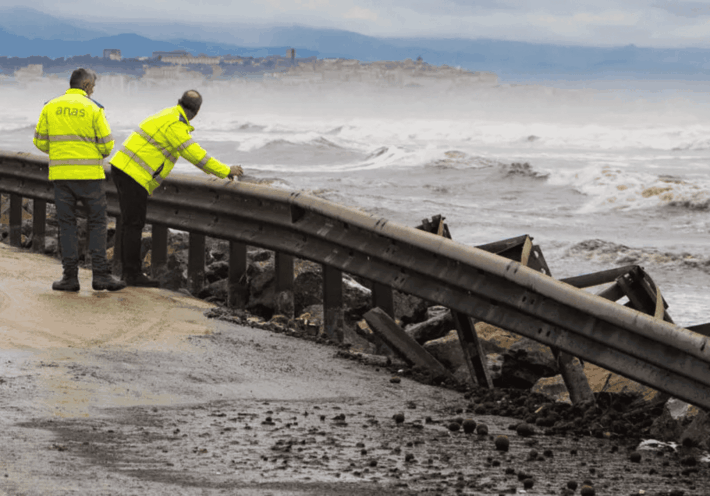
CATANZARO – Three weeks after Cyclone Harry struck, as the mud begins to dry and reveal the wounds inflicted on the territory, citizens, merchants, and small business owners continue to assess the damage and face the challenges of recovery. With businesses destroyed and shops and beach resorts unable to reopen, the provisional estimate of damages for the South stands at around 2 billion euros; however, the count is still ongoing and the figure is expected to rise drastically due to the inevitable decline in productive activities. A South brought to its knees by a catastrophe that exceeded all predictions, a dramatic testament to a climate crisis that allows no further delays and demands effective and urgent measures.
In the heavy general silence of institutions and media, a voice of hope emerges from the world of ethical entrepreneurship and the Third Sector. “I feel a duty to speak out not only to express solidarity, but to chart a course.” These are the words of Francesco Augurusa, president of the Christian Union of Entrepreneurs and Executives (UCID) Calabria and of the Antonio Emanuele Augurusa Foundation. “I speak in the dual capacity of one who represents business ethics and one who, through his Foundation, witnesses firsthand the social vulnerabilities of this land. We must not allow this disaster to become yet another excuse for resignation.”
According to the president of UCID Calabria, the devastation that struck the Ionian coast is bringing to light the resilience and industriousness of those who live in these territories, but it is also highlighting delays and shortcomings in institutional responses, which too often prove insufficient to address the challenges facing the South. “This is not merely a meteorological catastrophe; it is a test of our civic resilience. I have been told of young people mobilizing to protect community spaces, of volunteers committed to providing material aid, psychological and human support to the people and territories most affected. This is Calabria: a land that possesses an ‘industrious dignity’ that the national narrative often ignores.”
However, Augurusa warns, dignity alone is not enough. Citizens cannot and must not be left alone to deal with the consequences of a catastrophe for which they bear no responsibility: “As an intermediary body between the State and citizens, we call for reconstruction that goes beyond mere restoration of what existed. We cannot simply put stones back where they were: we must rethink the model of development and territorial safety.” Augurusa then addresses institutions directly, urging them to do more for the recovery of the South: “We are not asking for welfare assistance, but for subsidiarity.” Augurusa reaffirms the concrete commitment of the business world and the Third Sector. “As a Foundation and as UCID, we will do our part, moving beyond the logic of emergency response to embrace a logic of care. Because if businesses are the engine, people are the fuel. We will leave no one behind: neither the entrepreneur who must reopen their business, nor the family that has lost its points of reference.”
With this perspective in mind, the Augurusa Foundation announces new social and employment support initiatives. “We will continue our commitment to provide free and accessible training in the most affected areas. Throughout the year, we will offer new scholarships dedicated to young people affected by the cyclone, with particular attention to Calabria, within our free job placement programs Virtus Lab and our Advanced Training courses Social Impact Manager and Green Social Impact Manager.”
A commitment that aims to represent a signal of recovery and a concrete response to the need for certainty, new opportunities, and pathways capable of restoring confidence to affected communities. “Today more than ever, the South needs to know that new opportunities exist, new paths to follow, that a better future is possible. To those who have lost everything, we offer our solidarity, our support, and our promise: together we will rebuild a stronger South.”